
Florida’s real estate market doesn’t wait. In Tampa, Orlando, Miami, and Jacksonville, competitive offers and tight contract deadlines mean a slow mortgage process can cost you the home entirely. Getting approved quickly isn’t just convenient — in many cases it’s the deciding factor between closing and losing out to another buyer.
But quick approval doesn’t mean cutting corners. The right tools help you organize documents, understand your eligibility, protect your credit score, and connect with lenders who can actually close on time. This guide covers the most effective tools Florida homebuyers are using in 2026 to accelerate mortgage approval — from credit-safe eligibility checkers to flood zone research and document platforms. Each tool serves a distinct role, so you can build a process that fits your situation, whether you’re a first-time buyer in Orlando or an investor refinancing in Naples.
1. Florida Mortgage Rates – NoTouch Credit Pre-Qualification
Best for: Florida buyers who want lender shopping and eligibility checks without a credit score impact.
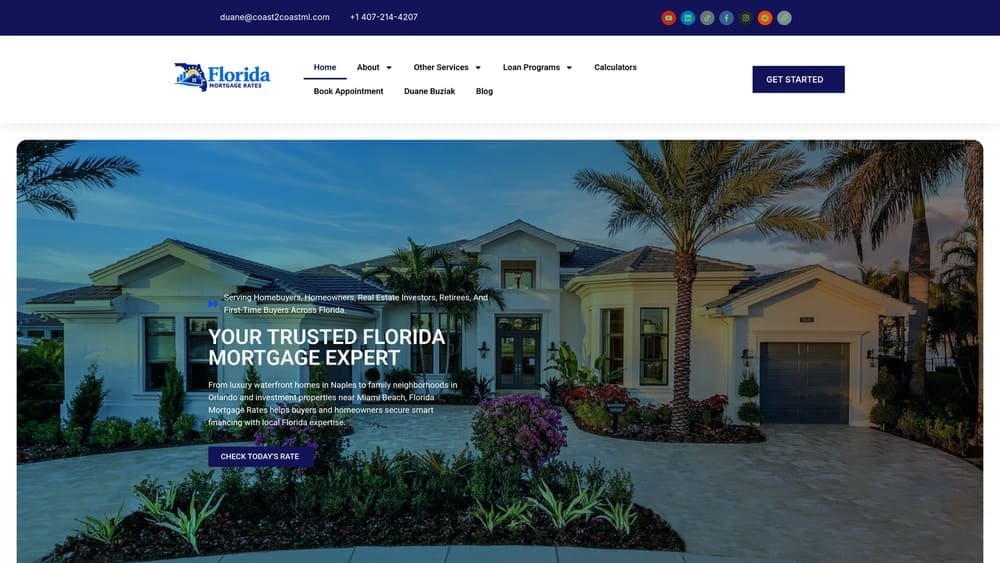
Florida Mortgage Rates is a Florida-based mortgage broker platform operated by Duane Buziak NMLS#1110647 that checks eligibility and shops hundreds of wholesale lenders simultaneously using VantageScore 4.0, with zero hard credit pull impact.
Where This Tool Shines
Most borrowers don’t realize they can explore full eligibility, compare loan programs, and get rate estimates without triggering a hard inquiry on their credit. Florida Mortgage Rates’ NoTouch Credit process uses a soft pull, so your score stays intact while you understand exactly where you stand across hundreds of lenders at once.
This is structurally different from applying to a single national lender like Rocket Mortgage or Movement Mortgage, which can only offer their own products. A wholesale broker model accesses the full lender marketplace simultaneously, which creates genuine rate and program competition on your behalf. The CFPB’s own consumer guidance on mortgage brokers vs. direct lenders explains this distinction clearly.
Key Features
NoTouch Credit Soft Pull: Eligibility check uses a soft inquiry — no impact to your FICO or VantageScore at the exploration stage.
Hundreds of Lenders Simultaneously: Shops wholesale lenders in a single submission rather than requiring multiple separate applications.
VantageScore 4.0: Accepts scores down to 500 for FHA-eligible scenarios, using a model that weighs recent credit behavior differently than traditional FICO.
Full Florida Market Coverage: Serves Tampa, Orlando, Miami, Jacksonville, Naples, Sarasota, and all Florida counties.
All Major Loan Types: Conventional, FHA, VA, USDA, Jumbo, Non-QM, Bank Statement loans, and DSCR loans for real estate investors.
Fastest Close Times: Wholesale lender network supports accelerated timelines; 24/7 availability for consultation and document submission.
Best For
First-time buyers who want to protect their credit during exploration, move-up buyers comparing multiple loan programs, and real estate investors evaluating DSCR or Non-QM options in Florida. Particularly valuable for borrowers who have been turned down elsewhere or want a genuine rate comparison before committing to a single lender.
Pricing
No fee for pre-qualification. Broker compensation is disclosed per federal RESPA requirements. Borrowers pay no out-of-pocket cost to access the eligibility check.
2. CFPB Mortgage Tools (Consumer Financial Protection Bureau)
Best for: Borrowers who want to understand loan types, rate ranges, and lender track records before applying.
The CFPB’s mortgage tools are the federal government’s free consumer mortgage education and rate exploration platform, maintained by the Consumer Financial Protection Bureau.

Where This Tool Shines
Before you talk to any lender, understanding the landscape — what rate ranges are realistic, what fees to expect, and what your loan estimate should look like — puts you in a far stronger negotiating position. The CFPB’s tools give you that baseline in plain language, without any sales pressure.
The complaint database is an underused feature. You can research any lender’s track record before applying, which helps you avoid lenders with documented patterns of closing delays or disclosure problems. That kind of due diligence directly supports faster, cleaner approvals.
Key Features
Rate Exploration Tool: Shows national and regional mortgage rate ranges to help you benchmark offers you receive.
Loan Type Explainers: Clear breakdowns of FHA, VA, conventional, ARM vs. fixed — essential reading for first-time buyers.
Closing Cost and Loan Estimate Guides: Explains every line item on a Loan Estimate so you’re not surprised at the table.
Know Before You Owe Resources: Federal mortgage disclosure guides that explain your rights and timelines under TRID rules.
Lender Complaint Database: Searchable records of consumer complaints filed against specific lenders — useful for vetting before you apply.
Best For
First-time buyers who want to understand the mortgage process before speaking with a lender, and any borrower who wants to verify that a loan estimate they’ve received is reasonable and complete.
Pricing
Free. This is a federal government resource funded by taxpayers and maintained by the CFPB.
3. AnnualCreditReport.com – Free Credit Report Access
Best for: Identifying credit errors and derogatory marks before a lender sees them.
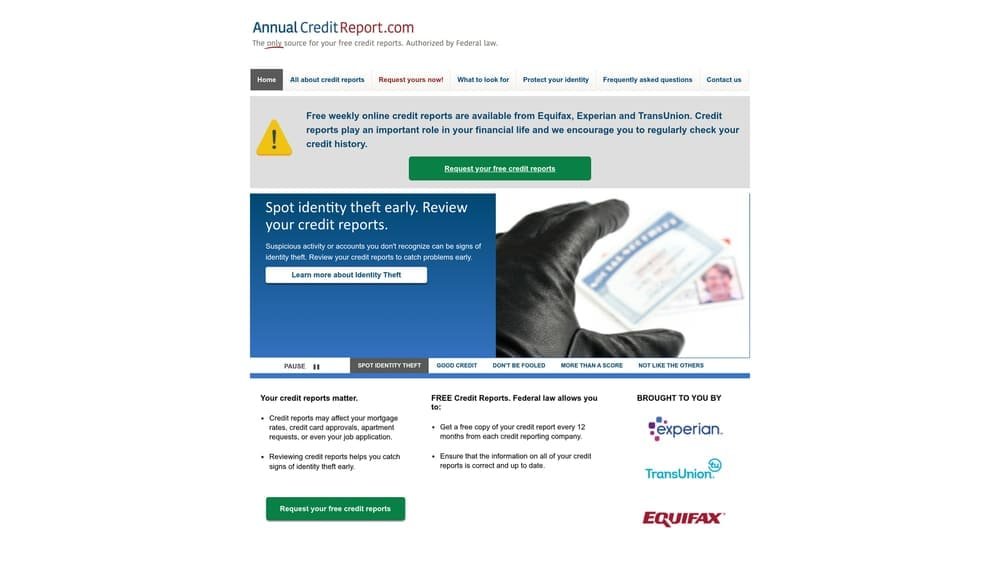
AnnualCreditReport.com is the only federally authorized source for free annual credit reports from all three bureaus — Equifax, Experian, and TransUnion — as mandated by the Fair Credit Reporting Act.
Where This Tool Shines
One of the most common causes of mortgage approval delays is a credit report error the borrower didn’t know existed. A collection account from a medical bill, an account reported as open that was closed, or an identity theft entry can all trigger underwriting holds that take weeks to resolve mid-process.
Pulling your reports here before you apply gives you the opportunity to dispute errors and let the correction cycle run before your lender ever sees your file. This is entirely a soft pull — no credit score impact — and weekly free reports are currently available, making it easy to track changes as disputes resolve.
Key Features
All Three Bureaus at No Cost: Pull Equifax, Experian, and TransUnion reports in one session — no subscription or credit card required.
Error Identification: Review for collection accounts, late payments, incorrect balances, or accounts that aren’t yours.
Dispute Interface: Initiate disputes directly through the report interface for each bureau.
Weekly Access: Free weekly reports are currently available — useful for monitoring dispute resolution progress.
Zero Credit Impact: Consumer-initiated soft pull; does not affect your score in any way.
Best For
Every Florida homebuyer, without exception. Reviewing your credit reports before application is one of the highest-leverage preparation steps available, and it costs nothing.
Pricing
Free. Federally mandated under the Fair Credit Reporting Act. No credit card required.
4. Fannie Mae HomeReady Eligibility Tool
Best for: Florida buyers exploring low-down-payment conventional loan options in qualifying census tracts.
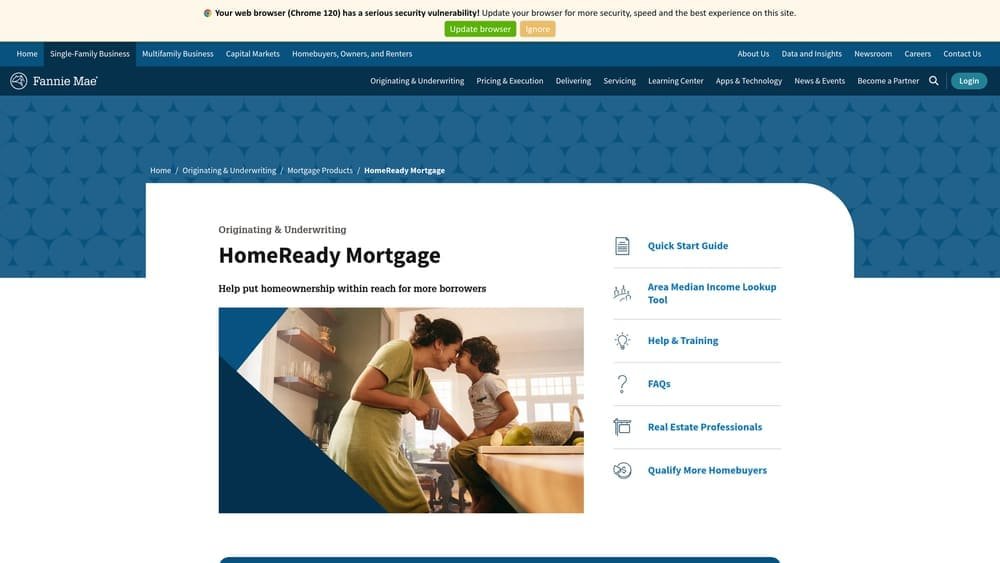
Fannie Mae’s HomeReady tool is an official address-based lookup that determines whether a property qualifies for the HomeReady low-down-payment conventional loan program based on area median income limits.
Where This Tool Shines
HomeReady offers 3% down payment with reduced private mortgage insurance (PMI) for borrowers who qualify — a meaningful cost advantage over standard conventional financing. But eligibility depends on both borrower income and property location relative to area median income (AMI) thresholds. The address lookup removes the guesswork.
For Florida buyers in markets like Orlando, Jacksonville, or parts of Tampa where home prices are moderate relative to local AMI, HomeReady eligibility can open doors that a standard conventional loan won’t. Confirming this before applying means your lender can structure the right program from the start, which avoids mid-process program switches that delay closing.
Key Features
Address-Level Income Limit Lookup: Enter a specific property address to see the AMI-based income limits for that census tract.
Program Confirmation: Confirms 3% down and reduced PMI eligibility for qualifying Florida properties.
Lender Integration: Results integrate with lender underwriting for faster program determination at application.
Education Course Pairing: HomeReady requires completion of a homebuyer education course (Framework or equivalent) — the tool links to approved providers.
Best For
First-time and repeat buyers in Florida with moderate incomes purchasing in eligible census tracts, particularly in Orlando, Jacksonville, and parts of the Tampa Bay area where AMI thresholds make qualification realistic.
Pricing
Free. This is an official Fannie Mae resource available to any buyer or lender.
5. HUD-Approved Housing Counselor Locator
Best for: Buyers who want lender-credible preparation documentation and structured pre-purchase guidance.
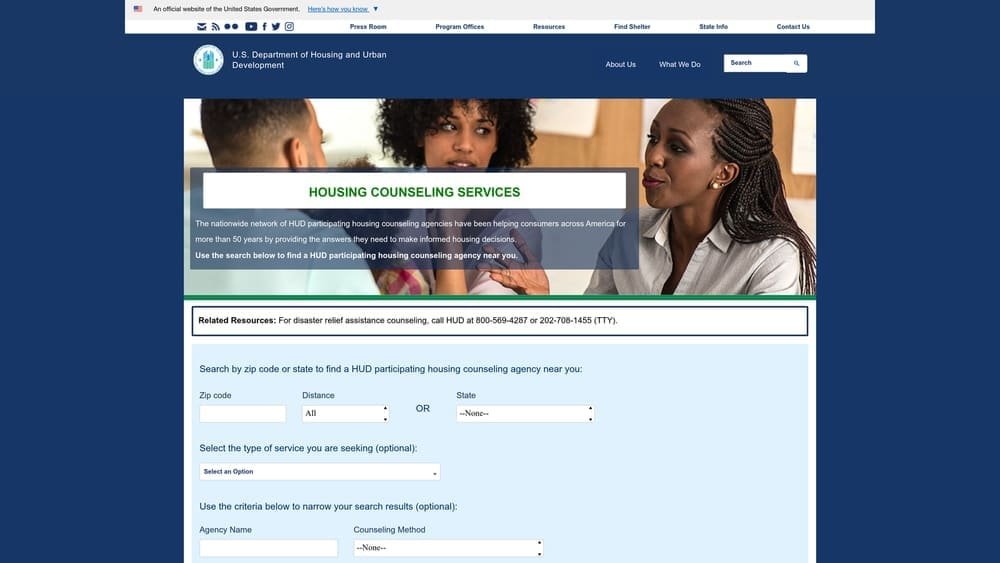
HUD’s housing counselor locator connects Florida buyers with certified pre-purchase housing counselors who provide documentation that lenders recognize as a signal of application quality and borrower readiness.
Where This Tool Shines
A HUD-certified counseling session produces a certificate that is recognized by FHA lenders and many conventional programs. Beyond the certificate, the session itself covers credit review, budgeting, and loan readiness in a structured format — the kind of preparation that reduces the back-and-forth with underwriting that slows closings.
For Florida buyers pursuing FHA 203k loans or certain loan programs that require counseling as a condition, this step is mandatory. For everyone else, it’s a low-cost way to arrive at application with a cleaner, more complete file. Many Florida counselors now offer virtual sessions, so geography isn’t a barrier regardless of where in the state you’re purchasing.
Key Features
Zip Code Search: Locates HUD-certified counselors by zip code across all Florida counties.
Lender-Recognized Certificate: Counseling completion certificate accepted by FHA and many conventional lenders as evidence of borrower preparation.
Comprehensive Scope: Sessions cover budgeting, credit review, debt management, and loan readiness.
Virtual Access: Many Florida counselors offer phone and video sessions for statewide reach.
Program Requirement Fulfillment: Required for FHA 203k and some loan programs — completing this early removes a potential closing delay.
Best For
First-time buyers who want structured preparation, borrowers with credit challenges who need a roadmap, and anyone pursuing loan programs that require counseling as a condition of approval.
Pricing
Free or low-cost. Fees vary by agency; HUD regulations prohibit excessive charges. Many Florida agencies offer sessions at no cost to the borrower.
6. Florida Department of Revenue – Property Tax Data
Best for: Calculating accurate PITI payments before applying, so your DTI calculation is correct the first time.
Florida’s Department of Revenue property tax portal provides county-level millage rate data essential for calculating your true monthly payment before you ever speak with a lender.
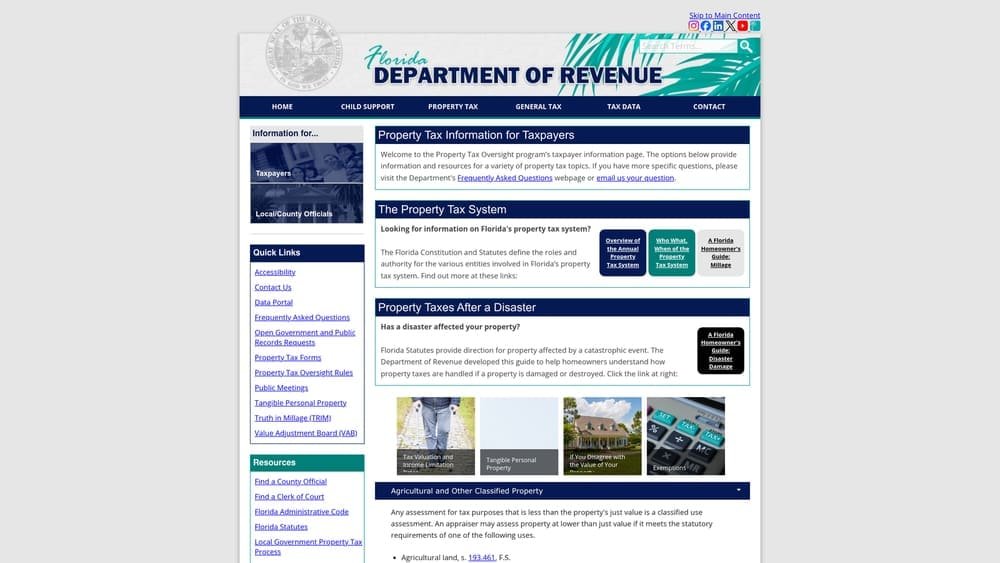
Where This Tool Shines
Florida buyers are frequently surprised to learn that property tax rates vary significantly across the state. Miami-Dade, Broward, and Palm Beach County effective rates differ substantially from Hillsborough (Tampa), Orange (Orlando), and Duval (Jacksonville). A buyer who estimates their PITI using the wrong county’s rate may qualify at a loan amount they can’t actually support once the real tax bill arrives.
This matters directly for approval speed: buyers who underestimate property taxes often need to re-qualify at a lower loan amount mid-process, which resets the timeline. Running accurate tax estimates before application means your pre-qualification reflects your actual purchasing power. Florida’s homestead exemption — which reduces taxable value for primary residences — is also documented here, and applying for it at closing can meaningfully lower your ongoing tax burden.
Key Features
County-by-County Millage Rates: Accurate tax rate data for every Florida county to support precise PITI calculations.
Market-Specific Data: Covers all major Florida markets including Miami-Dade, Broward, Hillsborough, Orange, Duval, Collier, and Sarasota counties.
Homestead Exemption Information: Details on the exemption that reduces taxable value for primary residences — relevant to long-term affordability.
DTI Accuracy: Prevents the common approval delay caused by underestimating property tax in the debt-to-income ratio.
Best For
Every Florida buyer, but especially those purchasing in counties where property tax rates are higher than the national average, and buyers moving from out of state who may underestimate Florida’s county-level tax variation.
Pricing
Free. Florida state government resource available to any taxpayer or prospective buyer.
7. FEMA Flood Map Service Center
Best for: Florida coastal and low-elevation property buyers who need to understand flood insurance requirements before applying.
FEMA’s Flood Map Service Center is the official federal portal for flood zone determination — required research for any Florida property purchase, particularly in coastal markets.
Where This Tool Shines
Flood insurance is a material cost that doesn’t exist in most other states the way it does in Florida. If your property sits in a FEMA Special Flood Hazard Area (Zone A, AE, or VE), your lender will require flood insurance as a condition of the loan. In coastal markets like Tampa, Miami, Sarasota, Naples, Fort Lauderdale, and the Florida Keys, a significant share of properties carry this requirement.
Flood insurance premiums directly affect your debt-to-income ratio and, therefore, your maximum loan amount. A buyer who doesn’t account for flood insurance in their pre-qualification may find they qualify for less than expected — or need to restructure the loan entirely. Running the FEMA lookup before you make an offer gives you an accurate cost picture and prevents this mid-process surprise.
Key Features
Address-Level Flood Zone Determination: Enter any Florida property address to see its FEMA flood zone designation (Zone A, AE, X, VE, and others).
Lender Requirement Identification: Confirms whether flood insurance will be required as a loan condition — a direct monthly cost affecting DTI.
Critical Market Coverage: Especially important for Tampa, Miami, Sarasota, Naples, Fort Lauderdale, Jacksonville, and the Florida Keys.
LOMA Lookup: Identifies whether a property may qualify for a Letter of Map Amendment to remove it from a flood zone designation.
DTI Impact Awareness: Flood insurance requirement directly affects maximum loan amount and monthly payment structure.
Best For
Any buyer purchasing in coastal Florida counties or low-elevation areas — which covers a substantial portion of the Florida market. This lookup should happen before making an offer, not after going under contract.
Pricing
Free. Official FEMA government resource available to any buyer, lender, or real estate professional.
8. DocuSign / Adobe Acrobat Sign – E-Signature Platforms
Best for: Eliminating paper-related delays in loan disclosures, intent-to-proceed documents, and closing packages.
DocuSign and Adobe Acrobat Sign are the industry-standard e-signature platforms that Florida lenders and title companies use to execute loan disclosures and closing documents without physical paper delays.
Where This Tool Shines
Waiting for wet signatures on initial disclosures, loan estimates, and intent-to-proceed documents is one of the most preventable sources of closing delays. Federal TRID rules require lenders to wait specific business days after disclosure before proceeding — and that clock doesn’t start until you sign. Every hour of delay on your end is a day lost on the approval timeline.
Both platforms are accepted by virtually all Florida lenders and title companies. The audit trail and timestamp documentation they generate satisfies federal e-signature requirements under the ESIGN Act, so there’s no legal ambiguity. Mobile-friendly access means you can sign disclosures from anywhere in Florida — at work, at home, or in the car after a showing — without scheduling a branch visit.
Key Features
Immediate Disclosure Execution: Sign initial disclosures, loan estimates, and intent-to-proceed documents within minutes of receiving them.
Universal Lender Acceptance: Accepted by virtually all Florida lenders, title companies, and real estate attorneys.
ESIGN Act Compliance: Audit trail and timestamps satisfy federal electronic signature legal requirements.
Mobile Access: Sign from any device, anywhere in Florida, without visiting a branch or printing a single page.
Closing Package Support: Handles full closing document packages for remote or hybrid closings.
Best For
Every Florida mortgage borrower. The ability to respond to lender document requests within minutes rather than days is one of the most controllable factors in closing timeline. Most borrowers access these platforms through their lender at no direct cost.
Pricing
DocuSign offers free limited personal use; paid plans start at approximately $15/month. Adobe Acrobat Sign is included with Adobe Acrobat subscriptions starting at approximately $23/month. Most borrowers access these tools through their lender’s platform at no direct cost.
Which Tool Is Right for Your Florida Mortgage Situation?
Quick mortgage approval in Florida is a process, not a product. The right combination of tools makes each step faster, more accurate, and less stressful — and the best starting point depends on where you are in the journey.
Credit-sensitive or first-time buyer? Start with Florida Mortgage Rates’ NoTouch Credit pre-qualification and AnnualCreditReport.com before anything else. Know your credit picture before any lender sees it.
Comparing loan programs? Layer in the CFPB mortgage tools and Fannie Mae’s HomeReady eligibility checker to understand which programs you qualify for and what rate ranges are realistic.
Buying in a coastal Florida market? Run the FEMA Flood Map check before making an offer. Flood insurance can materially affect your DTI and maximum loan amount — discovering this after you’re under contract creates unnecessary pressure.
Concerned about property taxes? Pull the Florida Department of Revenue data for the specific county you’re buying in. Miami-Dade, Broward, and Orange County rates differ enough from Hillsborough and Duval to change your qualifying loan amount.
Self-employed or an investor? Prioritize document organization and e-signature readiness. Your lender can only move as fast as you can respond to document requests. Having two years of tax returns, bank statements, and P&L statements digitally organized before you apply removes the single biggest controllable delay in the process.
Speed in mortgage approval comes from preparation, not shortcuts. Florida’s fastest closings happen when buyers arrive organized, credit-aware, and connected to a lender who shops multiple options simultaneously rather than routing everything through a single institution’s pipeline.
For Florida-specific guidance, including credit-safe eligibility checks, VantageScore 4.0 pre-qualification, and access to hundreds of wholesale lenders, get your credit-safe consultation today with Duane Buziak NMLS#1110647 at Florida Mortgage Rates.